



Mortar joints may look like a small part of a brick wall or chimney, but they play an important role in how masonry performs. They help hold masonry units together and protect the wall from weather exposure.
Over time, mortar can crack, crumble, erode, or fall out. In Duluth and other parts of Northern Minnesota, moisture and repeated freeze-thaw cycles can make deterioration more noticeable. Knowing what tuckpointing is and when it may be needed can help homeowners address mortar problems before they become more extensive.
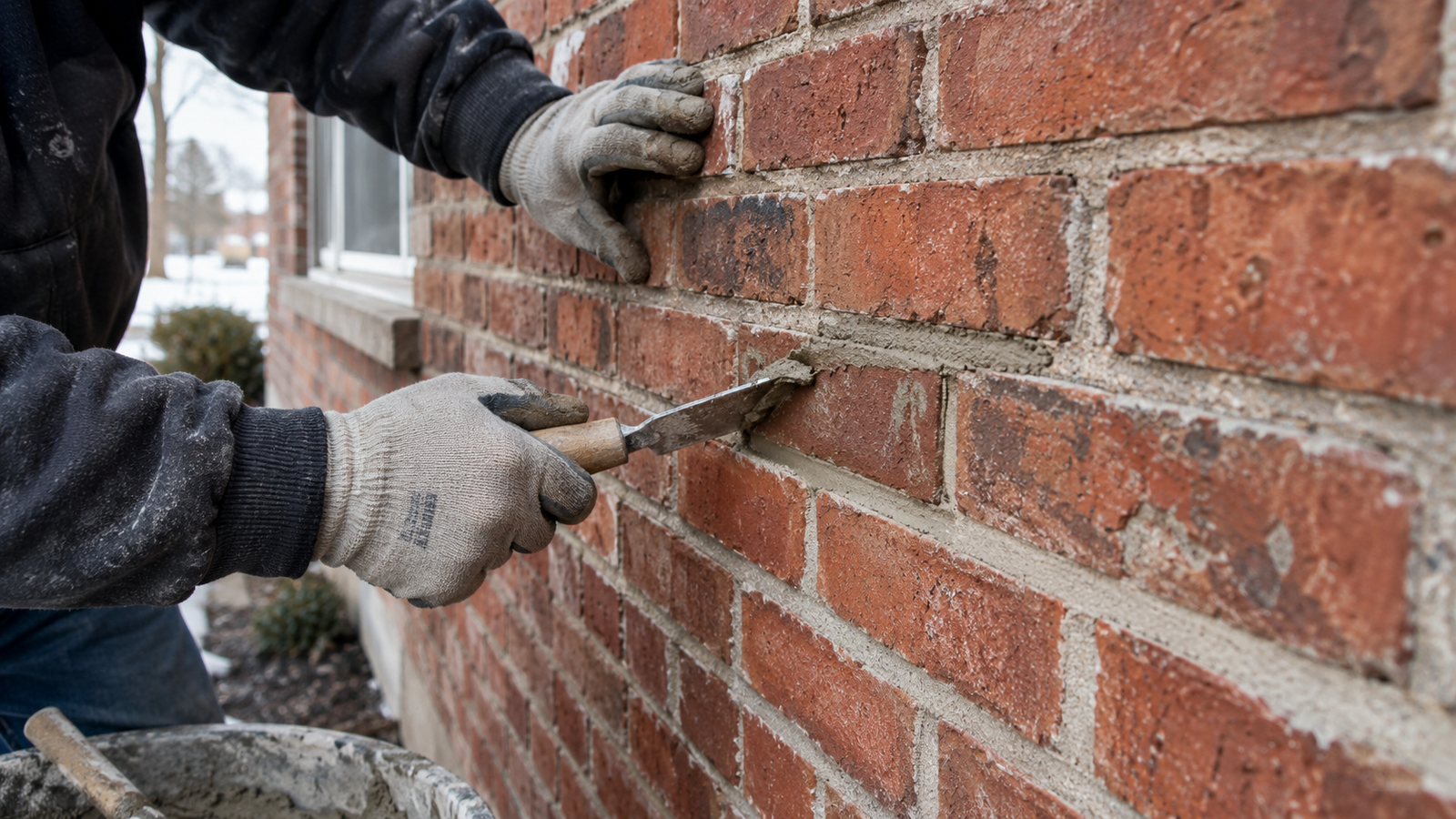
What is tuckpointing? Tuckpointing is a masonry repair process in which deteriorated mortar is removed from the joints between bricks or other masonry units and replaced with new, compatible mortar. The goal is to restore damaged joints, improve weather resistance, and help preserve masonry that is still in good condition.
What Does Tuckpointing Do?
Tuckpointing focuses on mortar joints rather than automatically replacing the bricks themselves. If the bricks remain sound but the mortar between them has deteriorated, repairing those joints can help restore the wall’s condition and appearance.
A proper repair does more than cover a damaged surface. Failed mortar is removed, the joint is cleaned, and suitable replacement mortar is installed and finished. The condition of the brick, moisture exposure, drainage, and movement in the wall all affect whether tuckpointing is the right repair.
How Does Tuckpointing Work?
Professional tuckpointing usually begins with an inspection of the masonry. A mason looks at the mortar joints, surrounding bricks, moisture exposure, and any cracking or movement that may indicate a larger issue.
The basic process typically includes:
- Inspecting the masonry. The damaged joints and surrounding brickwork are evaluated.
- Removing deteriorated mortar. Loose or failed mortar is carefully removed without unnecessarily damaging brick edges.
- Cleaning the joints. Dust and loose debris are cleared from the prepared joints.
- Selecting compatible mortar. The new mortar should suit the existing masonry and exposure conditions.
- Placing new mortar. Fresh mortar is compacted into the prepared joints.
- Tooling the joints. The surface is shaped to create the intended joint profile.
- Protecting the repair while it cures. Fresh mortar needs suitable curing conditions.
The details matter. The National Park Service advises matching important mortar properties such as hardness and permeability when repairing historic brick masonry. Mortar that is too hard for older masonry can contribute to deterioration in the surrounding brick.
For additional technical background, see the National Park Service guidance on common brick masonry problems.
When Is Tuckpointing Needed?
Tuckpointing may be appropriate when mortar joints are deteriorated but the surrounding masonry is still suitable for repair.
Common signs include the following.
Cracked Mortar Joints
Cracks within mortar joints or separation where mortar meets brick can indicate deterioration.
Some small cracks develop from normal movement, temperature changes, or aging. Cracks that become wider, return after previous repairs, continue through bricks, or follow a noticeable pattern may point to movement that should be assessed before the joints are repaired.
Crumbling or Powdery Mortar
Mortar that breaks apart easily, sheds sandy material, or appears visibly soft may be deteriorating.
If the problem is localized and the surrounding masonry is sound, tuckpointing may be appropriate. Older masonry should be assessed carefully because some traditional mortars are naturally softer than modern cement-rich mixes.
Missing or Eroded Mortar
Sections where mortar has fallen out leave open joints between masonry units. Weather can also gradually wear mortar back from the face of the brick.
A recessed joint does not always mean failure because some masonry was intentionally built with recessed joint profiles. The area should be checked for softness, cracking, missing material, and changes compared with surrounding joints.
Gaps Between Bricks
Irregular gaps where mortar has disappeared can be a sign that joint repair is needed.
Do not fill every opening you see. Some brick walls contain intentional drainage openings, commonly called weeps, that should remain open. If you are unsure whether a gap is damage or part of the wall’s drainage system, have it identified first.
Loose or Displaced Bricks
Loose brick can occur alongside failed mortar, but tuckpointing alone may not solve the problem.
A loose or displaced brick may need to be reset or replaced, and the cause should be identified before the surrounding joints are repaired. Loose masonry overhead, especially on a chimney, should be professionally assessed.
Moisture Staining or Recurring Dampness
Damaged mortar joints can provide one possible path for water to enter masonry.
However, mortar is not the only possible source. Flashing, roof details, gutters, drainage, chimney crowns, cracks, and other components may also contribute. Tuckpointing should repair failed joints, not replace a proper moisture investigation.
Why Damaged Mortar Should Be Addressed
As joints continue to erode, more of the masonry may be exposed to rain, melting snow, and seasonal weather.
That does not mean every small crack needs major work. The important step is to determine whether the damage is localized, moisture-related, or connected to movement elsewhere in the structure.
The National Park Service recommends periodically monitoring exposed brick masonry for cracking, spalling, bowing, leaning, and mortar deterioration. Identifying the cause before selecting a repair can help avoid inappropriate work.
If deteriorated mortar is affecting a brick wall, Townley Masonry’s brick repair and tuckpointing services can help determine whether joint repair, brick replacement, or another masonry repair is appropriate. Townley’s current Brick Work service page specifically includes tuckpointing and mortar-joint repair among its services.
Where Is Tuckpointing Commonly Used?
Tuckpointing can be used on many mortar-jointed masonry features, including:
- Exterior brick walls
- Brick facades
- Masonry chimneys
- Brick steps and entry features
- Older brick buildings
- Some masonry foundations
- Stone or block masonry where joint repair is appropriate
The repair method should match the type and condition of the masonry. A brick facade, an older foundation, and an exposed chimney can have different moisture and material considerations.
When Does a Chimney Need Tuckpointing?
Chimneys are heavily exposed to rain, snow, wind, temperature changes, and freeze-thaw conditions.
Signs that chimney mortar may need attention include:
- Missing or eroded mortar joints
- Crumbling mortar
- Visible gaps
- Loose mortar fragments
- Cracks concentrated in the joints
- Deterioration that becomes more noticeable after winter
Tuckpointing may be suitable when the main problem is deteriorated mortar and the surrounding bricks remain serviceable. If bricks are severely cracked, spalled, loose, or displaced, additional repair may be needed.
Townley Masonry’s chimney repair services cover masonry chimney repairs and related work for properties in the Duluth area.
Why Mortar Compatibility Matters
Choosing the right replacement mortar is an important part of tuckpointing.
The strongest mortar is not automatically the best mortar. Existing brick and mortar need to work together as a system. This is especially important in older masonry, where a very hard or low-permeability repair mortar can behave differently from the original materials.
The National Park Service advises matching important mortar characteristics such as hardness and permeability when repairing historic brick masonry. It notes that overly hard mortar can contribute to deterioration of the surrounding brick.
For homeowners, the practical takeaway is simple: replacement mortar should be selected for the specific masonry, not only by color or strength.
Tuckpointing in Duluth and Minnesota’s Freeze-Thaw Climate
Northern Minnesota weather makes moisture management especially important for masonry.
Water can enter cracked joints, porous masonry, or other openings during rain, snowmelt, and thaw periods. When temperatures fall, moisture within masonry can freeze. Repeated freezing and thawing can contribute to cracking, spalling, and mortar deterioration.
The National Park Service lists freeze-thaw cycles among the conditions that can contribute to brick masonry cracking and notes the particular risk where moisture is present in northern climates.
Fresh mortar also needs appropriate conditions while it develops and cures. Industry guidance from the Concrete Masonry & Hardscapes Association notes that colder temperatures affect mortar setting and strength development and may require cold-weather construction and protection procedures.
Homeowners interested in the technical cold-weather guidance can review the Concrete Masonry & Hardscapes Association’s all-weather masonry guidance.
For Duluth homeowners, a practical time to look over accessible brickwork is after winter or severe weather. Watch for new mortar loss, widening gaps, flaking brick faces, or areas where water repeatedly runs across masonry.
A visual check from the ground can help identify changes. High chimneys or areas with loose masonry should be left to professionals with appropriate access and safety equipment.
Can Tuckpointing Fix Every Masonry Problem?
No. Tuckpointing is designed to address deteriorated mortar joints.
It will not correct significant wall movement, severe bowing, failed supports, badly damaged bricks, major chimney displacement, or every source of water intrusion.
If cracks continue through the brick itself, a wall is visibly leaning, or masonry units are loose or breaking apart, the area needs an on-site assessment before repairs are chosen.
The right repair should match the actual condition of the masonry rather than treating every visible crack the same way.
How Long Does Tuckpointing Last?
There is no single lifespan that applies to every tuckpointing project.
Performance depends on factors such as:
- Existing masonry condition
- Mortar compatibility
- Joint preparation
- Workmanship
- Weather exposure
- Moisture
- Drainage
- Climate
- The cause of the original deterioration
A sheltered brick wall may experience very different conditions from a chimney above the roofline.
Instead of relying on a fixed number of years, homeowners should monitor repaired areas and address new moisture or movement problems if they appear.
When Should You Call a Masonry Professional?
Consider a professional masonry assessment when:
- Mortar loss covers a large area
- Joints are crumbling or falling out
- Bricks are loose, displaced, or spalling
- Cracks are widening or returning
- A wall appears to bow or lean
- Moisture problems keep returning
- A chimney has widespread mortar deterioration
- The existing mortar type is uncertain
- You are unsure whether the problem is limited to mortar
A mason can help determine whether tuckpointing is appropriate or whether damaged bricks, moisture sources, movement, or other conditions also need attention.
Frequently Asked Questions About Tuckpointing
What is tuckpointing in simple terms?
Tuckpointing is the process of removing deteriorated mortar from masonry joints and replacing it with new, compatible mortar. It is commonly used on brick walls, chimneys, and other mortar-jointed masonry when the surrounding masonry is still suitable for repair.
What is the purpose of tuckpointing?
The purpose of tuckpointing is to restore damaged mortar joints. Proper joint repair can help reduce openings where weather and moisture enter, improve the appearance of masonry, and help preserve bricks or stones that remain in good condition.
How do I know if my brick needs tuckpointing?
Common signs include cracked mortar, crumbling joints, missing mortar, irregular gaps, and noticeable erosion. Loose bricks, widespread cracking, wall movement, or recurring moisture problems should be professionally evaluated because the repair may involve more than tuckpointing.
Can tuckpointing help with water problems?
Repairing failed mortar joints can reduce water entry through those joints, but it does not make an entire wall or chimney waterproof. If the moisture source is flashing, roofing, drainage, a chimney crown, or another building detail, that condition also needs attention.
Is tuckpointing only for old brick?
No. Older masonry often needs mortar-joint maintenance because of age and weather exposure, but newer brickwork can also develop failed mortar because of moisture, movement, workmanship, or environmental conditions.
Can chimneys be tuckpointed?
Yes. Chimney tuckpointing can repair deteriorated exterior mortar joints when the surrounding brick remains suitable for repair. Severe brick damage, displacement, or other chimney problems may require additional work.
Does tuckpointing replace damaged bricks?
No. Tuckpointing repairs mortar joints. Cracked, spalled, loose, or broken bricks may need to be reset or replaced separately.
Can tuckpointing be done in cold weather?
Cold-weather masonry work requires careful planning because fresh mortar must be protected while it cures. Conditions, masonry temperature, materials, and protection methods all matter. A masonry contractor should determine whether the weather is suitable for the repair. Industry guidance provides specific cold-weather procedures for masonry work.
How often should mortar joints be checked?
There is no universal schedule for every property. A periodic visual check, especially after winter or severe weather, can help homeowners notice new cracks, missing mortar, moisture staining, or loose masonry.
Get the Right Tuckpointing Repair for Your Masonry
Understanding what tuckpointing is makes it easier to recognize when mortar joints need attention. Cracked, crumbling, missing, or weathered mortar can be signs that a brick wall or chimney should be evaluated.
If you are in Duluth or a surrounding community and are concerned about deteriorated mortar, Townley Masonry can assess the masonry and help determine whether tuckpointing or another brick or chimney repair is appropriate.
